Mark Zuckerberg, CEO of Meta, has hired three researchers from OpenAI to bolster his company’s work on artificial intelligence. This strategic move aims to guide Meta Platforms through its current AI challenges. The social-media corporation brought aboard Lucas Beyer, Alexander Kolesnikov, and Xiaohua Zhai, all of whom previously held positions at OpenAI’s branch in Zurich, as per sources privy to this information. These individuals established OpenAI’s location in Zurich towards the end of last year. Prior to their time at OpenAI, they collaborated closely within Google DeepMind, which is the organization’s artificial intelligence division. A representative from OpenAI verified that the three scientists have departed from the organization. Zuckerberg has been on an intense recruiting drive To correct the company’s AI initiatives following the underwhelming reception of its most recent model, he has sometimes proposed giving researchers up to $100 million to become part o...
PLUS: India attempts to unravel TXT marketing opt-ins; China’s AI clampdown proves successful; Australia collaborates with Boeing on AWACS and drones; plus additional news!
Asia In Brief Last week, Chinese tech behemoth Baidu conducted a live stream featuring an AI replica of popular local influencer Yonghao Luo. The event attracted 13 million views and generated $7.5 million in sales.
Luo is a technology entrepreneur known for initially gaining prominence as an educator when his lecture videos became widely popular online in China. He later led businesses involved in manufacturing smartphones and operating a blogging website. Recently, Luo has been hosting "live streams," which serve as extensive product demonstrations prevalent in China's e-commerce sector.
Baidu developed a virtual rendition of Luo by utilizing its ERNIE models to facilitate immediate interaction between this digital avatar and both the online public and live attendees.
According to a Baidu statement, Yonghao Luo’s digital avatar along with an auxiliary avatar engaged in natural banter, often trading jokes back and forth. They showcased intricate movements like maintaining eye contact and synchronized speech, closely resembling those of actual human hosts. Throughout this interaction, they kept up a constant connection with their audience in real-time, highlighting fresh possibilities within the sector.
The event drew more than 13 million viewers and raked in over 55 million RMB ($7.5 million) from merchandising sales.
It’s an incredible era to be living in.
Last week, India's Telecommunication Regulatory Authority initiated a project designed to verify customers' permission for receiving digital marketing communications.
As detailed in an "Information note" [PDF], the regulator encounters numerous grievances regarding unsolicited text messages and phone calls. The organizations behind these communications assert they are valid since customers agreed to receive promotional content either during an in-person encounter or via methods of obtaining permission that cannot be independently verified.
Since the individuals behind these messages intend to deceive the receivers, the regulatory body obstructs numerous potential spam origins; however, this process inadvertently affects some genuine users as well.
The initiative focused on tracking consents seeks to document when and how customers agree to be contacted, assisting genuine marketers in connecting with their target demographic. Consequently, the regulatory body has initiated a trial involving institutions from India’s banking and telecommunications sectors, aiming to decrease the prevalence of spam communications. Should this endeavor prove fruitful, regulators plan to broaden the scope of the project across various other business segments.
Last week, China’s Cyberspace Administration commemorated the successful conclusion of their initiative aimed at preventing the misuse of artificial intelligence.
The regulatory body reported that more than 3,500 unauthorized AI applications were removed from circulation, over 960,000 sources of illicit content were addressed, and 3,700 user accounts underwent action.
More than 400 entities have adhered to Beijing’s mandate to tag AI-produced material, and major internet companies like Tencent and Douyin acted to eliminate unsuitable content and applications.
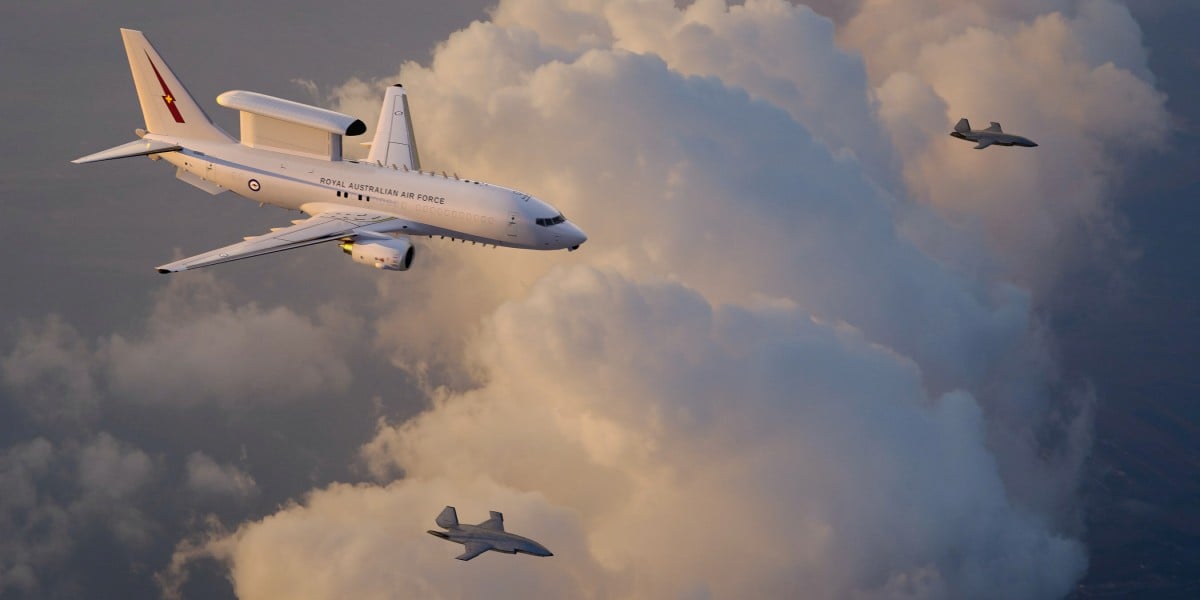
Last week, Australia's Air Force teamed up with the American aerospace company Boeing to demonstrate how troops can operate drones from inside an airborne early warning and control (AWACS) aircraft.
Australia runs an AWACS system known as the E-7A Wedgetail, which is derived from the Boeing 737 platform, and collaborates with the firm on developing a drone named the MQ-28 Ghost Bat.
Last week, crew aboard the Wedgetail operated a pair of Ghost Bats – an example of a technique called “teaming” that sees crewed and drone aircraft operate together. Boeing and Australia plan further tests involving F/A-18F and F-35 jets.
Last week, the U.S. Federal Communications Commission cautioned China Mobile about potential substantial penalties resulting from its refusal to cooperate with investigations regarding its activities within the United States.
The Commission views China Mobile as a potential risk to national security and initiated an inquiry into the company in 2022. The regulatory body has demanded that China Mobile submit several documents along with detailed information about its operations. According to a Citation and Order [PDF] released recently, the Commission noted that China Mobile failed to furnish the necessary data and cautioned that substantial penalties would be imposed if the carrier continues to refuse compliance.