Mark Zuckerberg, CEO of Meta, has hired three researchers from OpenAI to bolster his company’s work on artificial intelligence. This strategic move aims to guide Meta Platforms through its current AI challenges. The social-media corporation brought aboard Lucas Beyer, Alexander Kolesnikov, and Xiaohua Zhai, all of whom previously held positions at OpenAI’s branch in Zurich, as per sources privy to this information. These individuals established OpenAI’s location in Zurich towards the end of last year. Prior to their time at OpenAI, they collaborated closely within Google DeepMind, which is the organization’s artificial intelligence division. A representative from OpenAI verified that the three scientists have departed from the organization. Zuckerberg has been on an intense recruiting drive To correct the company’s AI initiatives following the underwhelming reception of its most recent model, he has sometimes proposed giving researchers up to $100 million to become part o...
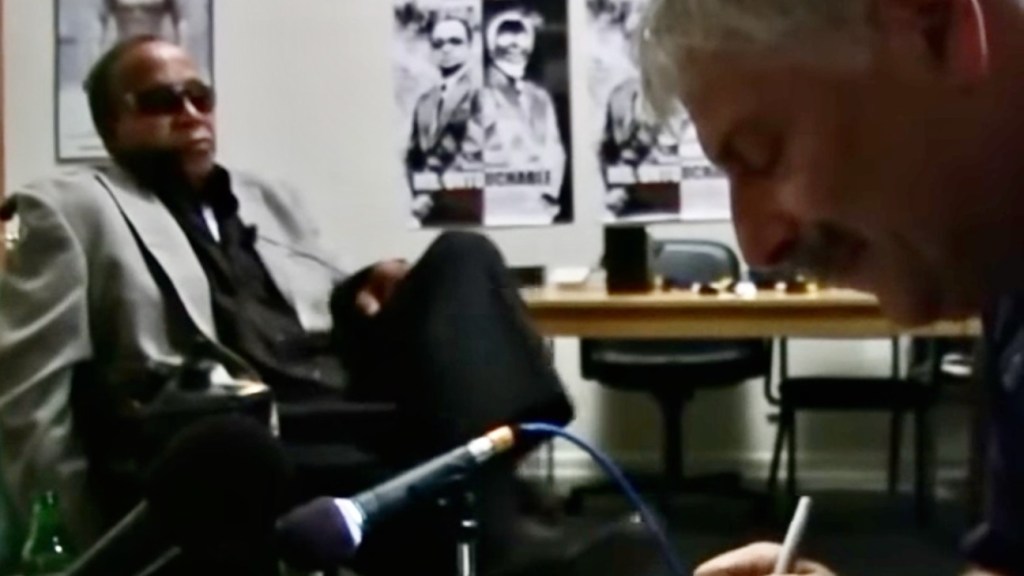
In the 1970s, the rise in heroin usage among African American populations in urban areas such as New York City prompted President Richard Nixon to initiate his War on Drugs campaign. According to John Ehrlichman, who served as Nixon’s domestic policy chief, this initiative aimed at "linking hippies with marijuana and blacks with heroin." Additionally, their strategy involved criminalizing these groups extensively to “disrupt those communities,” he revealed in 2016.
Legs McNeil employs that quotation in his documentary. Frank Lucas & The True Story of American Gangster: Pusherman , released by MVD Entertainment, which is now available on the streaming platform Tubi as of today (June 24). "This was completely new to me," he shares. The Hollywood Reporter I found it to be an incredible statement. It resonated with me since they would plunder your belongings and specifically aim at you. As a child, I too faced targeting for participating in anti-war protests.
McNeil's film centers on Frank Lucas, the Harlem drug dealer who gained prominence in Ridley Scott's 2007 cinematic portrayal of drug culture. American Gangster , which was inspired by a New York McNeil and Mark Jacobson join forces to tackle American Gangste "Much of the narrative was fabricated," Jacobson states on camera while outlining Lucas' position as a Harlem boss who smuggled high-purity heroin from Southeast Asia throughout the Vietnam conflict. Both Jacobson and Steve Zaillian share credit for co-authoring the script.
Denzel Washington, portrayed as "too pretty" for the role according to McNeil, comments, "I enjoyed the film; it was entertaining. However, it lacked accuracy."
McNeil discovered this information from Jacobson, who spoke with Lucas for his article, and from Richie Roberts, the diligent detective portrayed by Russell Crowe (Roberts appears as one of the commentators in the movie). The two authors, Jacobson and McNeil, have maintained their friendship for 46 years. Jacobson wrote gonzo journalism pieces for the Village Voice and New York and McNeil co-founded PUNK magazine, co-authored PleaseKillMe:TheUncensoredPunkHistory and contributed to music publications such as SPIN.
"McNeil remembers they had dinner together about two or three times a year. He shared the entire account of his collaboration with Frank Lucas. Since I hadn’t read the initial narrative, I eventually picked it up and was impressed enough to think, 'This could be an excellent film.' That’s when I decided, why not? Let's bring this writer's work directly to the audience.”
In both films, the major disclosure is that during the war, Lucas arranged for heroin shipments from Vietnam to be sent to the United States inside coffins of deceased soldiers. He frequently traveled to the Golden Triangle—the area where Thailand, Laos, and what was formerly Burma converge—where he encountered numerous poppy fields and dense jungles used for converting crude opium into pure white powder. These trips allowed him to strike profitable agreements and establish his coveted Blue Magic product line.
"Yeah, that's not true, right?" Jacobson remarked when he initially heard about this ingenious smuggling method. GoodFellas Writer Nicholas Pileggi. That was the case. Consequently, McNeil immersed himself in the project, his inaugural film following numerous years of penning articles and books.
McNeil states, “Music writing was something I despised.” He adds, “There wasn’t much I wouldn’t do to avoid covering musical topics. For instance, I’d rather cover conflicts around the world than write about tunes. During the era when crack cocaine infiltrated small-town USA, I tackled that subject matter. If I had continued with journalism back then, you can bet your bottom dollar I would’ve explored the issue of fentanyl spreading through rural areas too. What truly captivated my interest were compelling narratives, particularly those rooted in 1970’s New York City—a place that felt akin to an untamed frontier for reporters. That decade offered countless tales waiting to be told, among them being the saga of Frank Lucas who provided insight into reality far beyond typical accounts." American Gangster ."
Primarily, he and Jacobson criticize Lucas for his depiction, noting that Washington did not mimic his raspy voice and pointing out various discrepancies in the characterization. Roberts also adds some complaints to the mix.
McNeil came to New York in the mid-1970s from Cheshire, Connecticut. He describes it as "horrible, horrible place" and believes it still is. His reason for moving was to escape the unpleasant people in Connecticut. Now, he observes that those same types of individuals have relocated to New York.
He has since moved to Pennsylvania, but during those years, McNeil resided on 14th Street. “Addicts would collapse in the entranceway, preventing me from opening the door to enter,” he recounts. “This is how New York City was back then. Drug sellers would send a basket down from a window, take the payment, and pull it back up.”
McNeil favored imbibing over using marijuana or injecting heroin. He states, "I detested opioids." When he was young, he underwent a leg surgery and received morphine injections four times daily; this experience left him with an aversion to them. This dislike is how he acquired his moniker.
McNeil’s subsequent endeavor leads him to Los Angeles and delves into another narcotics-related narrative: the Wonderland Avenue murders (the film). Wonderland Released in 2003, featuring Val Kilmer. "I will simply share the true story," he states.
Exactly as he does with Pusherman , concluding with an animated version of Lucas in a wheelchair snatching beer mugs from a bar. “He’s always been this way,” observes McNeil. “Of course, not during his days as a millionaire. It was simply about the desire for those beer mugs.”
More from The Hollywood Reporter
- Billy Joel's Two-Part Docuseries Set for HBO Premiere
- Russell Crowe's Nazi Drama 'Nuremberg' Acquired by Sony Pictures Classics