Mark Zuckerberg, CEO of Meta, has hired three researchers from OpenAI to bolster his company’s work on artificial intelligence. This strategic move aims to guide Meta Platforms through its current AI challenges. The social-media corporation brought aboard Lucas Beyer, Alexander Kolesnikov, and Xiaohua Zhai, all of whom previously held positions at OpenAI’s branch in Zurich, as per sources privy to this information. These individuals established OpenAI’s location in Zurich towards the end of last year. Prior to their time at OpenAI, they collaborated closely within Google DeepMind, which is the organization’s artificial intelligence division. A representative from OpenAI verified that the three scientists have departed from the organization. Zuckerberg has been on an intense recruiting drive To correct the company’s AI initiatives following the underwhelming reception of its most recent model, he has sometimes proposed giving researchers up to $100 million to become part o...
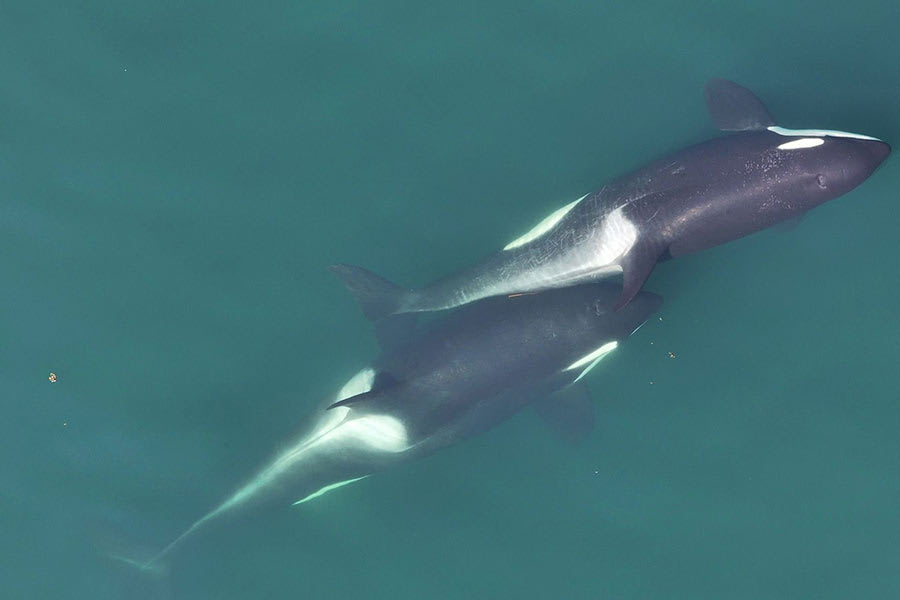
(CNN) — While reviewing fresh drone recordings of the orca groups he researches in the Salish Sea, behavioral ecologist Michael Weiss observed one of the killer whales holding what appeared to be a green object in its jaws. He also noted an uncommon activity: some of these orcas were engaging in prolonged contact with each other, sometimes rubbing against one another for as long as 15 minutes.
Initially, Weiss wasn't too concerned about it, stating "whales often behave oddly," but further sightings captured with his drone showed consistent images. Upon closer inspection, he confirmed that unmistakably, the whales were utilizing pieces of kelp to rub against one another.
In just two weeks during 2024, Weiss and his colleagues recorded 30 instances of this intriguing interaction. The observations revealed that the southern resident orcas—a specific group of killer whales—were pulling up strands of bull kelp from the ocean floor to use them when rolling against each other’s bodies. This activity was termed "allokelping" by the research team. According to their findings presented in a study released Monday in Current Biology, allokelping might serve both hygienic purposes related to maintaining skin health and social functions aimed at strengthening bonds within the pod.
This finding represents the initial instance of cetaceans—marine mammals such as whales, dolphins, and porpoises—being documented utilizing an object for grooming purposes.
In the realm of the animal kingdom, tool usage is uncommon among animals, as noted by behavioral ecologists. However, when such behavior occurs, it typically serves purposes like acquiring nourishment or luring partners. "This represents a distinct approach to utilizing objects," stated Weiss, who leads the study and directs the Center for Whale Research based in Washington State.
Allokelping theories
Weiss and his group suggest that there could be two potential explanations for this observed behavior.
Maintaining hygiene, like addressing or eliminating dead skin, may offer an explanation. Dolphins frequently lose old skin, aiding in keeping their bodies sleek and streamlined. However, according to Weiss, skin abnormalities, notably gray spots, are increasingly common among southern resident orcas. Therefore, applying allokelp could potentially serve as a method for healing these blemishes.
Weiss pointed out another theory: allokelping might serve to reinforce social connections, since the whales observed engaging in this activity were typically closely related or of a similar age.
"These individuals exhibit strong social bonds," remarked Deborah Giles, an orca researcher from the SeaDoc Society who wasn’t part of this study. While intriguing, this isn't completely unexpected, she noted additionally.
Giles pointed out that orcas are known for being both curious and touch-sensitive creatures, possessing brains significantly larger relative to their bodies. He also noted that certain sections of the killer whale's brain exhibit greater development when contrasted with human neural structures. Additionally, each group of orcas boasts its distinct vocal patterns.
Cetaceans possess highly sensitive skin, according to Janet Mann, a behavioral ecologist from Georgetown University with three decades of experience studying marine life. Killer whales are often observed rubbing against various surfaces like sandy shores in Canada or algae-covered areas. However, it is uncommon to witness two separate orcas utilizing an object to apparently remove dead skin cells from one another, she noted.
"What this research reveals is our limited understanding of how cetaceans behave in their natural habitat," Mann stated.
It's unlikely that allokelping would have been identified without advancements in drone and camera technology, which have unveiled "an entirely new realm" for researchers aiming to gain deeper insights into the intricate behaviors of cetaceans, according to Mann. Traditionally, observations of whales were conducted from land or vessels, providing a restricted outlook on activities occurring underwater. However, drones provide an aerial viewpoint of the actions taken by sea creatures near the surface. This behavior might have existed within the group for some time; we simply couldn't observe it until recently.
Cultural phenomenon
Giles mentioned that orca researchers equipped with drones will likely keep an eye out for such behavior from now on.
While killer whales aren't the sole cetaceans known for tool usage, some bottlenose dolphins have been seen meticulously taking out and utilizing sponges to flush out bottom-dwelling prey. This complex action is displayed by merely a minority within their community, noted Mann, whose research focuses on these dolphins in Australia’s Shark Bay.
Other bottlenose dolphins lift their flukes to form circles, stirring up mud-plumes that encircle and contain fish. Humpback whales have historically employed bubble nets as a technique for capturing food.
The question of whether these instances qualify as "tool use" remains debated within the scientific community; however, they all pertain to activities associated with searching for sustenance. Allokelping stands out due to its possible advantages for dermatological well-being and social bonds—essentially, it seems to represent a cultural custom.
This concept of using tools for grooming others is mostly confined to primates, making it quite extraordinary," noted Philippa Brakes, a behavioral ecologist at the non-profit organization Whale and Dolphin Conservation who wasn't part of this study. "It seems as though we're witnessing an important juncture for cetaceans since it shows that having a thumb isn't essential for manipulating tools.
Brakes, an expert in social learning and culture among cetaceans, commented that this groundbreaking study "reveals significant insights into the importance of culture for these species." Every population—southern resident orcas in this instance—possesses a distinctive dialect for communication, specialized foraging techniques, and recently discovered unique forms of tool usage.
In an ever-evolving setting, Brakes stated, "Culture offers a remarkable method for creatures to adjust," just as it has done for Homo sapiens.
“Therefore, it’s even more crucial to safeguard both their environment and their behaviors,” she pointed out.
A ‘completely novel’ find
Certainly, the southern resident killer whales are facing severe threats and are under federal protection in both the United States and Canada, with their numbers dwindling down to only 74 individuals. Additionally, because human actions like disturbing the ocean floor and an increase in heatwaves attributed to global warming have led to a reduction in bull kelp populations, the entire marine environment is deteriorating.
Kelp forests play an essential role as nurseries for young Chinook salmon, which form a significant portion of the killer whales' food source, according to Giles. Over the years, southern resident killer whales have been increasingly absent from the Salish Sea, potentially due to declining availability of their preferred prey, noted Monika Wieland Shields, who co-founded and leads the Orca Behavior Institute.
"This research leads me to question whether one of the reasons Southern Residents still frequent the Salish Sea intermittently even when salmon numbers are scarce might be to participate in allokelping," Shields stated in an email to CNN.
The investigation is now venturing into fresh fields of inquiry.
"This particular piece of information about cetaceans is truly significant since it's entirely new," stated Dora Biro, an animal cognition researcher from the University of Rochester who wasn’t part of the research team.
Biro, whose research primarily focuses on tool usage among wild chimpanzees, noted that instances of ground-level tool utilization occur far more frequently compared to those found in water-based settings. Currently, she is collaborating with Weiss' group on a funding application aimed at gaining deeper insights into the reasons behind this behavior.
However, for brakes, there isn’t always a specific purpose required: "The aim might simply be fostering social connections, and even then, it would remain a tool."
The-CNN-Wire
& © 2025 Cable News Network, Inc., a Warner Bros. Discovery Company. All rights reserved.
The post Drone footage reveals orcas using tools in a stunning first appeared first on East Idaho News .