Mark Zuckerberg, CEO of Meta, has hired three researchers from OpenAI to bolster his company’s work on artificial intelligence. This strategic move aims to guide Meta Platforms through its current AI challenges. The social-media corporation brought aboard Lucas Beyer, Alexander Kolesnikov, and Xiaohua Zhai, all of whom previously held positions at OpenAI’s branch in Zurich, as per sources privy to this information. These individuals established OpenAI’s location in Zurich towards the end of last year. Prior to their time at OpenAI, they collaborated closely within Google DeepMind, which is the organization’s artificial intelligence division. A representative from OpenAI verified that the three scientists have departed from the organization. Zuckerberg has been on an intense recruiting drive To correct the company’s AI initiatives following the underwhelming reception of its most recent model, he has sometimes proposed giving researchers up to $100 million to become part o...
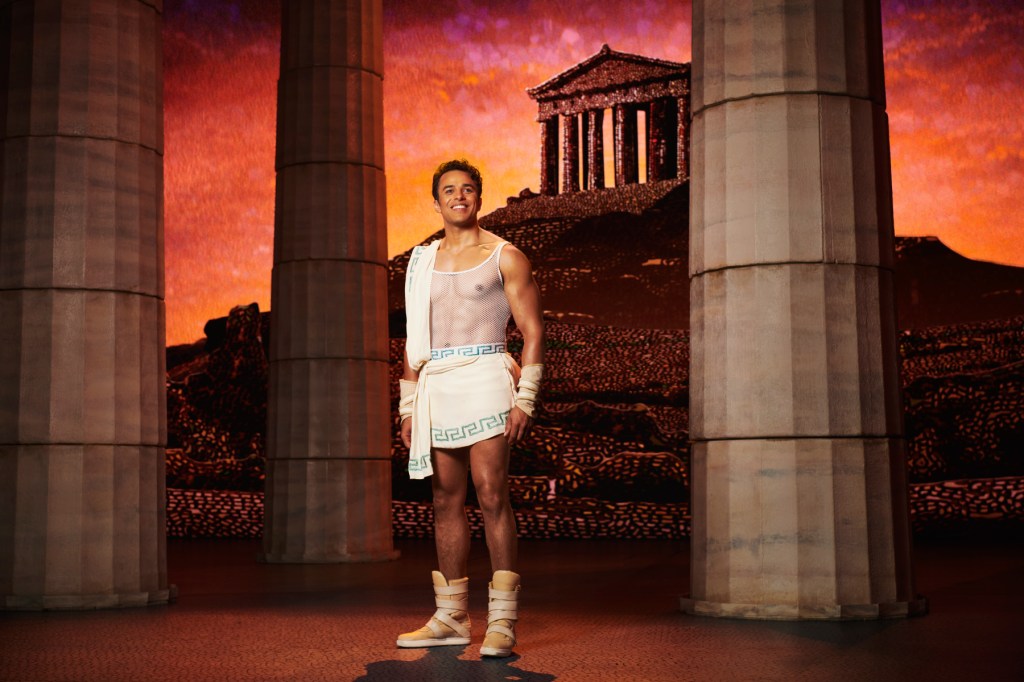
How can you perform a flying horse scene on stage? The answer is simple—you don’t. Instead, they remove the horse from sight. Despite this absence of an actual winged steed like Hercules’ companion Pegasus, Disney’s recent theatrical rendition of “Hercules” remains largely faithful to its beloved 1997 animated predecessor. However, with nearly three decades having passed since then, societal attitudes and storytelling approaches have evolved significantly. Unlike the original film which used rapid cuts and dynamic visuals along with lively characterization to create excitement, adapting these elements today softens their impact too much. This shift makes the overall presentation feel overly polished without enough intensity. Clocking in at around 110 minutes including breaks—longer than the 93-minute runtime of the movie—it certainly seems extended during performance.
"Hercules" achieved a modest success for the Mouse House but fell short when measured against its significantly more lucrative precursor, "Pocahontas." Despite this, both films remain memorable due to their lively 1990s feminist spirit. This characteristic is showcased prominently through the Muses in "Hercules"—a group of sassy, powerful-voiced African American women serving as a Greek chorus—whether seen on-screen or performed live, they keep the movie vividly etched in viewers' minds even today for those streaming it via Disney+.
Better audio engineering focused on enhancing the vocal clarity over the brass-heavy 13-member ensemble could have benefited this five-person group, yet each member exudes confidence and delivers impressive runs effortlessly. The primary mindset behind director Casey Nicholaw’s (“Aladdin”) staging emphasizes self-awareness. These performers serve as recurring narrators, infusing scenes with their infectious enthusiasm which invigorates the performance from start to finish; they nail every gesture and pose, emerging dramatically via the hydraulic lifts within Dane Laffrey's stage design to the audience's great pleasure. However, one might ponder whether such technical elements alone can elevate an entire theatrical presentation.
Aware that an engrossing narrative isn’t this tale’s strong point, Nicholaw maintains a brisk pace consistently, ensuring neither the action nor characters slow down as events cascade rapidly from one scenario to another. His efforts are bolstered significantly by Laffrey’s dynamically shifting quartet of colossal white Greek columns, which rearrange frequently to represent varying settings without pause. Visually, this production starkly contrasts with Broadway’s “The Great Gatsby,” yet similar to that show, the imagery employed—ranging from spectacular to almost garish—is predominantly driven by dominant video projections. These screens shift fluidly: now depicting realistic locales, then transitioning to abstract bursts of color and pattern.
Maintaining a rapid pace keeps the audience engaged despite the superficial content, though this approach leaves little room for depth. Characters sometimes experience moments of realization, yet these instances often fall flat as they are overshadowed by clichés or comedic exchanges. For instance, Hercules (played by Luke Brady) approaches someone and declares, “I’m searching for a man.” The response, delivered with a smile, is, “Isn’t everyone?” This isn't meant to showcase Disney’s acceptance of same-sex relationships; rather, it's just another fleeting reference among numerous one-liners inspired by various tropes from Greek mythology. While nobody expects a family-friendly musical to turn into a true Greek tragedy, adding more consistent engagement and substance would certainly enhance the overall experience.
The most compelling moments are those showcasing the clever and charming villain, Hades. With his sharp wit and striking appearance—complete with a sleek coat, fox-like demeanor, and a lustrous mane of white hair—Stephen Carlile delivers an utterly delightful performance reminiscent of Alan Rickman but amplified, both in energy and volume. Similar to all performers on the expansive Theatre Royal Drury Lane stage, he does not merely speak; he roars. Fortunately, Carlile’s portrayal, which builds upon James Woods’ iconic interpretation, remains robust enough to carry such intense delivery throughout.
Other characters do not fare as well. The original movie’s villains, Pain and Panic, have been transformed into bumbling fools named Bob and Charles, who resemble characters escaped from “The Lord of the Rings.” Their scenes feel forced since they barely get anything substantial to work with due to limited scripting. Similarly, Trevor Dion Nichols infuses his role as Phil, Hercules’ coach, with plenty of energy but misses out on capturing the humorously irritable nature of the part originally portrayed by Danny DeVito. This omission strips away layers from both his bond with Hercules and consequently diminishes the overall depth of the production; what could’ve added complexity is reduced to just minor initial frustration before fading entirely.
Alan Menken and David Zippel have increased the song catalogue by some margin – there are 25 listed musical numbers. That accounts for the increased running time since it takes much longer to sing something than to say it. But the new numbers feel merely efficient because they're so generic: "You will always be safe in my arms/ In this world full of dangers and harms" is way below David Zippel's best lyric work. And while Menken's music is efficient, that's more to do with Michael Kosarin's arrangements sung by a cast with real vocal chops.
But all character potential is flattened by writing and direction that allows for just one characteristic apiece. That means, as Hercules, buoyant Brady is asked to present little beyond a sweet-natured, naive hunk celebrated for his gym membership and gleaming dentistry. Happily, Brady is blessed with a well-produced high tenor voice that winningly sails over the band.
Interestingly, despite Casey starting out as a choreographer, the dance routine lacks expression even though it has energy. Regardless of the diligent efforts of the performers, not even a tap sequence manages to heighten the mood. However, perhaps it’s unrealistic to look for thrilling excitement in a production lacking dramatic build-up and resolution.
Producing a cherished property indicates that Disney recognizes there’s an audience eager to cheer as their treasured memories come alive onstage. However, when an overfilled production relentlessly demands constant enjoyment, what could be engaging becomes draining instead.
More from appstoreofficialid
- Disney Has Appointed Nike Alumnus Ron Faris To Lead Consumer Products Marketing
- Why Midjourney Became the Ideal Target for Hollywood's Initial AI Lawsuit