Mark Zuckerberg, CEO of Meta, has hired three researchers from OpenAI to bolster his company’s work on artificial intelligence. This strategic move aims to guide Meta Platforms through its current AI challenges. The social-media corporation brought aboard Lucas Beyer, Alexander Kolesnikov, and Xiaohua Zhai, all of whom previously held positions at OpenAI’s branch in Zurich, as per sources privy to this information. These individuals established OpenAI’s location in Zurich towards the end of last year. Prior to their time at OpenAI, they collaborated closely within Google DeepMind, which is the organization’s artificial intelligence division. A representative from OpenAI verified that the three scientists have departed from the organization. Zuckerberg has been on an intense recruiting drive To correct the company’s AI initiatives following the underwhelming reception of its most recent model, he has sometimes proposed giving researchers up to $100 million to become part o...
"Ironheart" Review: Marvel’s "Black Panther" Spinoff Discovers Its Identity Amid a Bumpy Start and Disappointing End
With Black Panther: Wakanda Forever , Ryan Coogler had an incredibly challenging job: honoring the past by commemorating the deceased Chadwick Boseman and his unforgettable contribution as T'Challa , narrating an engaging story in the current timeframe, and incorporating components to expand upon it Black Panther universe in the future.
In my opinion, Coogler handled the first part quite admirably, paying tribute to Boseman and allowing both his costars – particularly Angela Bassett – and the viewers space to mourn. However, when it was time to craft an independent narrative and broaden the storyline, he fell short. Black Panther universe, Wakanda Forever was quite disappointing - failing to allocate sufficient time and concentration needed to create fresh characters, involve them in engaging activities, or transform their stories into compelling avenues worthy of deeper investigation.
The main issue confronting Disney+'s new six-episode show is this. Ironheart , featuring Coogler as one of the executive producers. By focusing on Dominique Thorne's character, Riri Williams, Ironheart Is focusing on a character who first appeared in a film released almost three years ago, where their introduction was at most under chaotic conditions. Whichever way you look at it, Ironheart What it has going for it does not encompass "built-in narrative necessity."
The outcome is an unusual hybrid television series. Developed by Chinaka Hodge, Ironheart is left with no option but to begin with over 40 minutes of cumbersome setup and recapping, only to conclude with an unsatisfyingly static conclusion overshadowed by a prominent cameo from a well-known actor. However, sandwiched within these lackluster bookends lie four episodes that I found consistently entertaining. These segments feature several enjoyable performances and delightful moments of whimsy (I'm not alluding to the show’s flying exosuit). Ironheart reaches its pinnacle in the fifth episode with an extended action sequence/ product integration that I found absurdly entertaining.
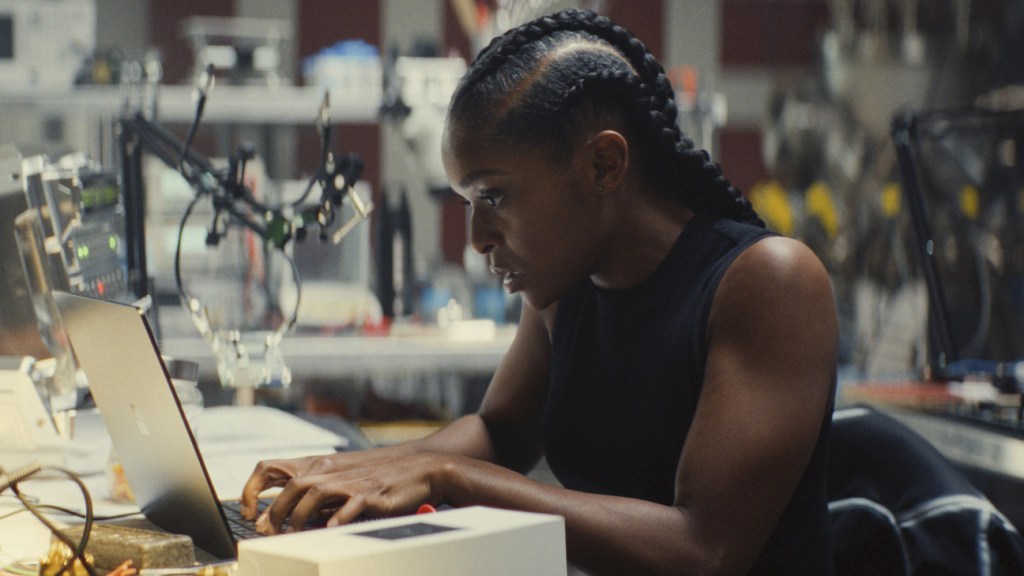
If your memory doesn’t hold much about Riri Williams, Ironheart Takes some time to get you updated. Riri, an exceptionally talented MIT student with a knack for mechanical engineering, prefers focusing on constructing her own rendition of Tony Stark’s Iron Man armor over pursuing traditional academics. Due to unspecified reasons, she is expelled from the university and subsequently heads back to Chicago—or rather, what appears to be Chicago but was filmed using second-unit photography and shot in Atlanta.
Staying at home allows Riri to renew her connection with her mom, Ronnie (Anji White), and meet Xavier (Matthew Elam), the sibling of her bestie, Natalie (Lyric Ross). Unfortunately, their reunion comes amidst tragedy as Xavier’s sister was fatally shot alongside Riri's cherished stepdad. In Chicago, for Riri, this marks both a confrontation with painful memories and an attempt to pursue groundbreaking achievements akin to those of Tony Stark, despite having absolutely zero resources available.
Riri is not the sole resident of Chicago dreaming of success and leaving her mark, trapped in an economically struggling cycle akin to a hamster running on a wheel. She gets swiftly pulled into a criminal operation led by Anthony Ramos Parker “The Hood” Robbins is portrayed as a charismatic yet largely undeveloped character whose leadership stems from an enigmatic, mystical cape bestowing specific abilities along with significant spiritual sacrifices. The group includes the lively ex-drag queen turned hacker Slug (played by Shea Coulé), explosives prodigy Clown (portrayed by Sonia Denis), and knife enthusiast John (acted by Manny Montana). They collaborate to take down several technology moguls known for their dubious ethical practices. It’s quite an entertaining ensemble.
Primarily, Riri focuses on perfecting her suit, particularly incorporating an AI system with a distinctive and recognizable personality. This task necessitates the assistance of a black market gadget aficionado ironically named Joe McGillicuddy (Alden Ehrenreich).
Ironheart is yet another instance showcasing the inconsistency that has affected several recent Marvel/Disney+ series Daredevil: Born Again to Echo to She-Hulk: Attorney at Law Of course, the present stage of Marvel movies has also been quite inconsistent. Meanwhile, the finest era of the MCU resembled a phenomenal long-running TV show—essentially over 20 episodes leading up to a thrilling climax. Endgame Perhaps the people working on the TV side at Marvel have simply forgotten how a television show should appear?
As it stands, Ironheart It just doesn’t structure correctly, beginning with a plain start and finishing equally unremarkably; despite an increase in both the complexity of the heists and the ethical dilemmas faced by Riri, I found myself questioning why this should be a six-part series rather than one spanning nine episodes. Agatha All Along or Daredevil or five like Echo The pacing and general framework seem off, whereas aspects such as Riri’s portrayal as an anti-hero—during one discussion, someone from production likened her character to Walter White or Tony Soprano, though this comparison doesn’t resonate at all—are jarringly inconsistent. Additionally, the progression of the antagonists throughout the season appears sudden. Typically, when Marvel manages to cover up narrative shortcomings with grandiose visuals, these issues become less noticeable; however, similar to Echo , Ironheart is marred by seemingly having a significantly smaller budget compared to similar works.
What sets Ironheart Separate yet integral to making the heart of the season so delightful are the bonds centered around characters. On his own, Thorne exhibits tenacious resolve, but numerous contrasting dynamics involving Riri along with strong supporting roles truly highlight their lead’s strengths. Given the traumatic events in Riri's past—a notable aspect as these tragedies arise from senseless city turmoil rather than typical MCU scenarios—there's an undercurrent of sorrow within most of these connections. Yet, there's comedy in her exchanges with Ross’ Natalie (departed physically but present emotionally), and tenderness when she tries either to reunite or deliberately stay apart from White’s Ronnie. Ehrenreich enters the narrative prominently starting from the second episode; however, the witty dialogue between him and Riri, enhanced by a pivotal moment featuring music from Alanis Morissette, proves both humorous and skillfully crafted. The only less convincing connection appears to be that with Elam’s Xavier.
The motives behind The Hood are weak, and his abilities aren’t well-explained, yet Ramos portrays Parker as a raw nerve embodying unfulfilled dreams. This allows Montana to bring more threat, with Denis adding a comedic yet perilous twist.
Due to the tight budget and peculiar editing decisions, none of the action scenes become particularly thrilling until about 15 minutes into the fifth episode. This is when a scene at a White Castle turns chaotic in an amusing way, utilizing the available props creatively and ending with a joke that struck me as ridiculously funny. The sequence lacks the polished combat sequences that added excitement to the highlights from previous episodes. Daredevil Or the stunt work that enhanced the strongest sections of Hawkeye Or the dimension-bending concepts that gave extra zest to Loki But I liked this down-to-earth take on the Marvel adventures.
Next, the pivotal moments in the final episode feature a passive cameo from a celebrity munching on pizza — slices presented in the manner of Chicago deep-dish style, though they clearly aren’t authentic Chicago deep-dish. Ignoring the dubious food representation, the conclusion feels underwhelming for a series that seemed to be finally discovering its identity beforehand.
One can readily identify the themes present. Ironheart that attracted the writers, and one can just as easily see how rushed they are. Whether it's expanding on the conflict between science and magic that has been part of the MCU particularly since the first Doctor Strange The show critiques the promotion of billionaire vigilantes to heroic standing; however, it has ideas worth exploring without possessing adequate form or means to convey them effectively. Despite a clunky start and an unfocused conclusion, my genuine affection developed during these middle episodes feels authentic.
More from The Hollywood Reporter
- Dominique Thorne Reveals Robert Downey Jr.'s Response to 'Ironheart': "He Instantly Understood"
- 'Thunderbolts' Director Jake Schreier Shares Insights in Malta: "Leap of Faith and Just Do It"