Mark Zuckerberg, CEO of Meta, has hired three researchers from OpenAI to bolster his company’s work on artificial intelligence. This strategic move aims to guide Meta Platforms through its current AI challenges. The social-media corporation brought aboard Lucas Beyer, Alexander Kolesnikov, and Xiaohua Zhai, all of whom previously held positions at OpenAI’s branch in Zurich, as per sources privy to this information. These individuals established OpenAI’s location in Zurich towards the end of last year. Prior to their time at OpenAI, they collaborated closely within Google DeepMind, which is the organization’s artificial intelligence division. A representative from OpenAI verified that the three scientists have departed from the organization. Zuckerberg has been on an intense recruiting drive To correct the company’s AI initiatives following the underwhelming reception of its most recent model, he has sometimes proposed giving researchers up to $100 million to become part o...
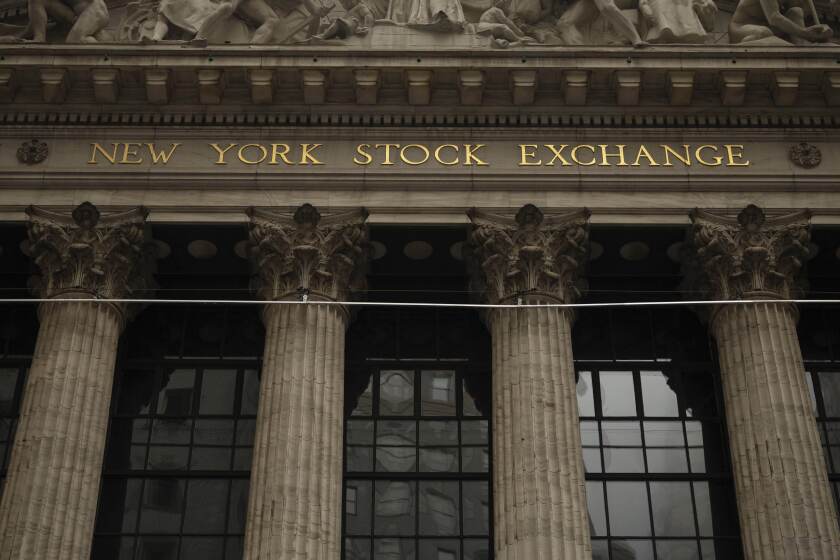
Oil prices increased while U.S. stock futures declined as worldwide financial markets responded to the American attack on Iranian nuclear sites.
The cost of Brent crude oil, which serves as the global benchmark, increased by 2.6% to reach $79 per barrel. Similarly, U.S. crude saw a rise of 2.6%, reaching $75.76 per barrel.
Early Sunday, U.S. troops launched assaults on three Iranian nuclear facilities, thereby intensifying the conflict between Israel and Iran.
Futures contracts for the S&P 500 and the Dow Jones Industrial Average declined by 0.4%, whereas Nasdaq futures dropped slightly more at 0.5%. There was minimal fluctuation observed in Treasury yields. These minor adjustments suggest that financial markets are handling recent events with relative composure.
This was clear during early Asian trade sessions. The Nikkei 225 in Tokyo dropped by 0.6%, with other key regional exchanges experiencing slight decreases as well.
The clash, initiated by an Israeli assault on Iran starting from June 13th, has led to volatile fluctuations in oil prices. This volatility has subsequently triggered oscillating movements within the U.S. stock market due to alternating concerns about how this war might interfere with worldwide crude distribution. As one of the key players in oil production, Iran also controls the strategically crucial Strait of Hormuz, a vital passage for most of the globe’s petroleum transportation.
"The circumstances continue to be very dynamic, with significant outcomes depending on whether Tehran chooses a measured response or takes a more confrontational approach," stated Kristian Kerr, who leads macro strategy at LPL Financial located in Charlotte, N.C., in his analysis.
If Iran retaliates by shutting down the waterway, it would pose significant technical challenges; however, traders fear that Iran might substantially interfere with shipping traffic through it. This disruption could lead to skyrocketing insurance premiums and make ship owners hesitant to navigate without protection from the U.S. Navy.
Several experts believe that Iran is not likely to block the strait due to its reliance on the passage for exporting its own petroleum, primarily to China, where it generates significant governmental income.
It’s an all-consuming option, akin to Sherman’s burning of Atlanta," remarked Tom Kloza, chief market analyst at Turner Mason & Co., adding, "The likelihood of this happening is slim.
Kloza believes that oil futures will decrease once the initial concerns subside.
Ed Yardeni, an experienced analyst, concurred, stating in his report that the leadership in Tehran would likely exercise restraint.
“He stated in an investor note on Sunday that they are not insane. The cost of oil ought to decrease, and global stock markets should rise accordingly.”
Other specialists remain unconvinced.
Andy Lipow, a Houston-based analyst with 45 years of experience in oil markets, stated that nations do not always behave rationally and expressed little surprise at the possibility of Tehran acting impulsively for either political or emotional motives.
If the Strait of Hormuz were entirely closed off, oil prices could surge to between $120 and $130 per barrel," predicted Lipow, adding that this would likely result in gas prices reaching approximately $4.50 a gallon in the US and have adverse effects on consumers.
"It would result in increased costs for all products moved by trucks, and it would make it tougher for the Fed to decrease interest rates," he stated.
During early morning trade in Asia, theTaiwan Index dropped by 1.5%, and theKospiinSouth Korea declined by 1%.Both countries, Taiwan and South Korea, depend significantly onoilimports that pass through theStrait of Hormuz.
Australia's S&P/ASX dropped by 0.7%, and the main index in New Zealand declined by 0.5%.
This tale initially surfaced in Los Angeles Times .