Mark Zuckerberg, CEO of Meta, has hired three researchers from OpenAI to bolster his company’s work on artificial intelligence. This strategic move aims to guide Meta Platforms through its current AI challenges. The social-media corporation brought aboard Lucas Beyer, Alexander Kolesnikov, and Xiaohua Zhai, all of whom previously held positions at OpenAI’s branch in Zurich, as per sources privy to this information. These individuals established OpenAI’s location in Zurich towards the end of last year. Prior to their time at OpenAI, they collaborated closely within Google DeepMind, which is the organization’s artificial intelligence division. A representative from OpenAI verified that the three scientists have departed from the organization. Zuckerberg has been on an intense recruiting drive To correct the company’s AI initiatives following the underwhelming reception of its most recent model, he has sometimes proposed giving researchers up to $100 million to become part o...
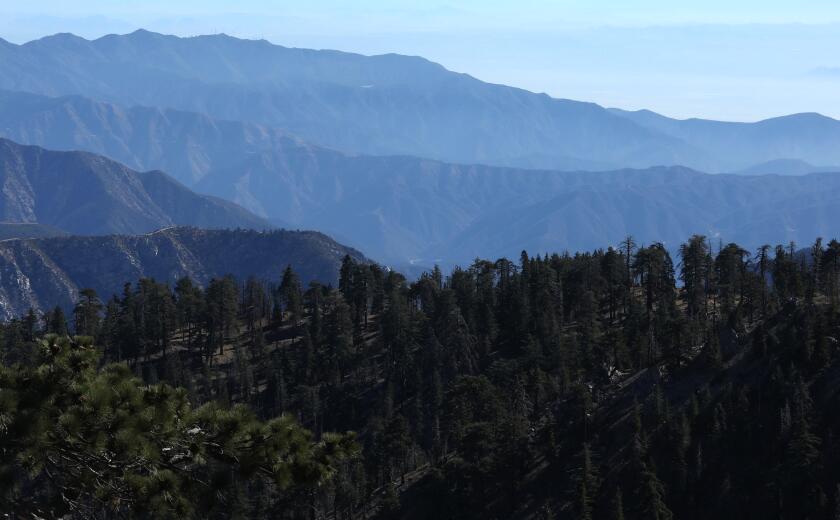
On Monday, the U.S. Department of Agriculture declared its intention to revoke an old regulation that has safeguarded 58.5 million acres of national forest land from activities such as road building and logging for many years.
The USDA, responsible for overseeing the U.S. Forest Service, announced it will abolish the 2001 " Roadless Rule" This provided enduring safeguards for particular wild regions inside the country's national forests. Research has discovered that constructing roads can divide habitats, disturb ecological systems, and boost erosion and sediment contamination in potable water, along with several other possible adverse effects.
USDA Secretary Brooke Rollins stated in an official release that the regulation—which affects roughly 30% of land within national forests—is considered antiquated and too limiting.
President Trump is once more eliminating unreasonable barriers to sensible resource management by revoking the excessively strict 'Roadless Rule.' Rollins stated in an official announcement This action initiates a new epoch of consistent and sustainable management for our country’s woodlands. Clearly, effective forest stewardship protects against catastrophic wildfires and ensures that coming generations of Americans can appreciate and benefit from this vast territory.
Over 40 states host regions safeguarded under this regulation. . In California, this covers approximately 4.4 million acres spread across 21 national forests such as the Angeles, Tahoe, Inyo, Shasta-Trinity, and Los Padres national forests, as stated by the source. USDA's website .
Environmental organizations swiftly condemned the USDA's choice.
"Secretary Rollins is using a blowtorch to dismantle an important regulation that protects nearly 60 million acres of national forests from severe road-related effects on both wildlife and their habitats as well as the country’s supply of drinking water,” stated Vera Smith, who leads the national forests and public lands program at the non-profit organization Defenders of Wildlife.
Josh Hicks, who leads the conservation campaigns at the nonprofit organization The Wilderness Society, stated that this policy has been "incredibly effective in safeguarding the country’s woodlands from activities such as mining, logging, and road construction for about 25 years now."
Hicks stated that any effort to rescind this would be seen as an assault on the air and water we consume, the plentiful recreational activities enjoyed annually by millions of individuals, sanctuaries for wildlife, and essential defenses against community threats posed by intensifying wildfire seasons.
According to the Forest Service’s report from 2001, national forests play a crucial role in providing drinking water across the United States. Additionally, regions marked as 'roadless' aid in safeguarding the origins of numerous watersheds that provide for millions of individuals. report on the effects of the regulation .
As for wildfires, Rollins said rescinding the 2001 Roadless Rule will enable the federal government to better manage forests for fire risk and timber production. Of the 58.5 million acres covered under the rule, 28 million acres are in areas at high or very high risk of wildfire, she said.
Multiple adversaries contested the idea that removing the regulation would lessen the chance of fires.
“It’s absurd for Secretary Rollins to present this as an initiative aimed at decreasing wildfire risks or enhancing recreational opportunities,” stated Rachael Hamby, policy director at the Center for Western Priorities, a conservation advocacy organization. “Industrial-scale logging actually worsens climate issues, thereby intensifying the severity of wildfires. Essentially, this plan amounts to a huge handout to lumber corporations, coming at the cost of our shared environment and public lands.”
Drew McConville, a senior fellow at the Center for American Progress, stated, “It seems like the administration is completely focused on rapidly selling off our public lands.” He added, “This move, which claims to prevent wildfires, would essentially make way for drilling, mining, and logging in some of our most beloved national forests. By now, it should be evident to President Trump that Americans do not support the idea of putting their forests and parks up for sale to the highest bidder.”
The choice is consistent with recent executive directives issued by President Trump designed to boost mining, logging, and drilling activities on federal lands. This includes a contentious Senate bill proposing similar measures. dispose of millions of hectares of government-owned land As part of Trump's "Single Grand Attractive Legislation Act."
In April, Trump also directed the opening of over 112.5 million acres of national forest land for industrial logging — an instruction that covers all 18 of California's national forests .
The president has stated that these steps will remove costly barriers To boost American businesses and innovations, assist in increasing local wood supplies, and reinforce energy independence, along with several other advantages.
Across numerous states—and notably in California—the topic of forest management for reducing wildfire risks has sparked significant political discussion. During his first term, this was particularly evident under President Trump’s administration. famously telling California It requires "clearing its forest floors" to prevent more severe fires.
Specialists argue that years of preventing fires in California have led to an accumulation of plant life that is now feeding bigger and more common wildfires. many of those same experts have warned Clearing brush does not equate to large-scale logging or clear-cutting — practices that can remove fire-retardant shade and moisture, resulting in an environment conducive to the rapid spread of flammable invasive plant species and grasses.
Chris Wood, instrumental in crafting the 2001 Roadless Rule during his tenure with the Forest Service and currently serving as the head of Trout Unlimited, remarked that this policy stands out as "one of the most substantial and well-received environmental accomplishments in U.S. history."
According to Gifford Pinchot, who was the inaugural head of the Forest Service, he defined conservation as 'using practical judgment to address everyday issues for the benefit of all,'" Wood stated. "We can only wish for sound reasoning to prevail and encourage the administration to reconsider their proposal.
This tale initially surfaced in Los Angeles Times .